The merger
When does the merger happen?
In steps, over several months. Bishop Hying’s decree of merger, issued on Thursday, October 22, took effect on Saturday, October 24: from that day, we are one parish. Trustee nominations closed on Sunday, October 25, and the trustee election was held at all weekend Masses on November 7–8: Eric Breunig and Laura Breunig were elected, subject to Bishop Hying’s confirmation. Bishop Hying will install Fr. Miguel as our pastor at the Installation Mass on Sunday, December 20, at 10:30 AM at St. Aloysius Church, Sauk City. The new parish corporation is expected in late December or January, the new councils as soon as possible, and the financial merger in 2027. We will add each date here as soon as it is set.
The Offertory Commitment Weekend on November 21–22 is not a step in the merger, but it comes at the right time. We have not held an offertory program in years, and the cost of running our parishes has gone up. Renewing our commitment now strengthens our finances as we grow together as one parish.
What does “merger” actually mean?
The merger happens in three stages, over several months.
- Canonical merger (Church law). Bishop Hying’s decree of October 22 made our parishes one new parish on October 24. He has appointed Fr. Miguel as pastor and will install him on December 20. The decree is posted in each of our churches, and you can read it here.
- Civil merger (Wisconsin law). After the installation, the new parish becomes a corporation under Wisconsin law. The pastor and the newly elected trustees sign the incorporation documents.
- Financial merger. Next year, our finances are combined into one set of accounts, with a new tax ID, bank accounts, and payroll. You will receive clear instructions about new envelopes and online giving before anything changes.
What is the new parish called?
Mary, Mother of Mercy Parish, the name our pastorate has used since 2024. Its patronal feast is Our Lady of Mercy, also called Our Lady of Ransom, on September 24.
Who is our pastor?
Bishop Hying has appointed Fr. Miguel Galvez, SJS, as pastor of Mary, Mother of Mercy Parish, and will install him at the Installation Mass on December 20. The Bishop also confirmed Fr. James Kotch, Fr. Pedro Escribano, and Fr. Cristian Valenzuela, all of the Society of Jesus Christ the Priest, as parochial vicars, and Deacon Michael Pipitone has been assigned as a parish deacon.
What happened to our former parishes?
Under Church law, Divine Mercy, St. Norbert, and the Mazomanie part of Holy Cross were joined into the new parish, and they are no longer separate parishes. The Mill Creek part of Holy Cross, with St. John the Baptist Church, became part of the new Saints Joachim and Anne Parish.
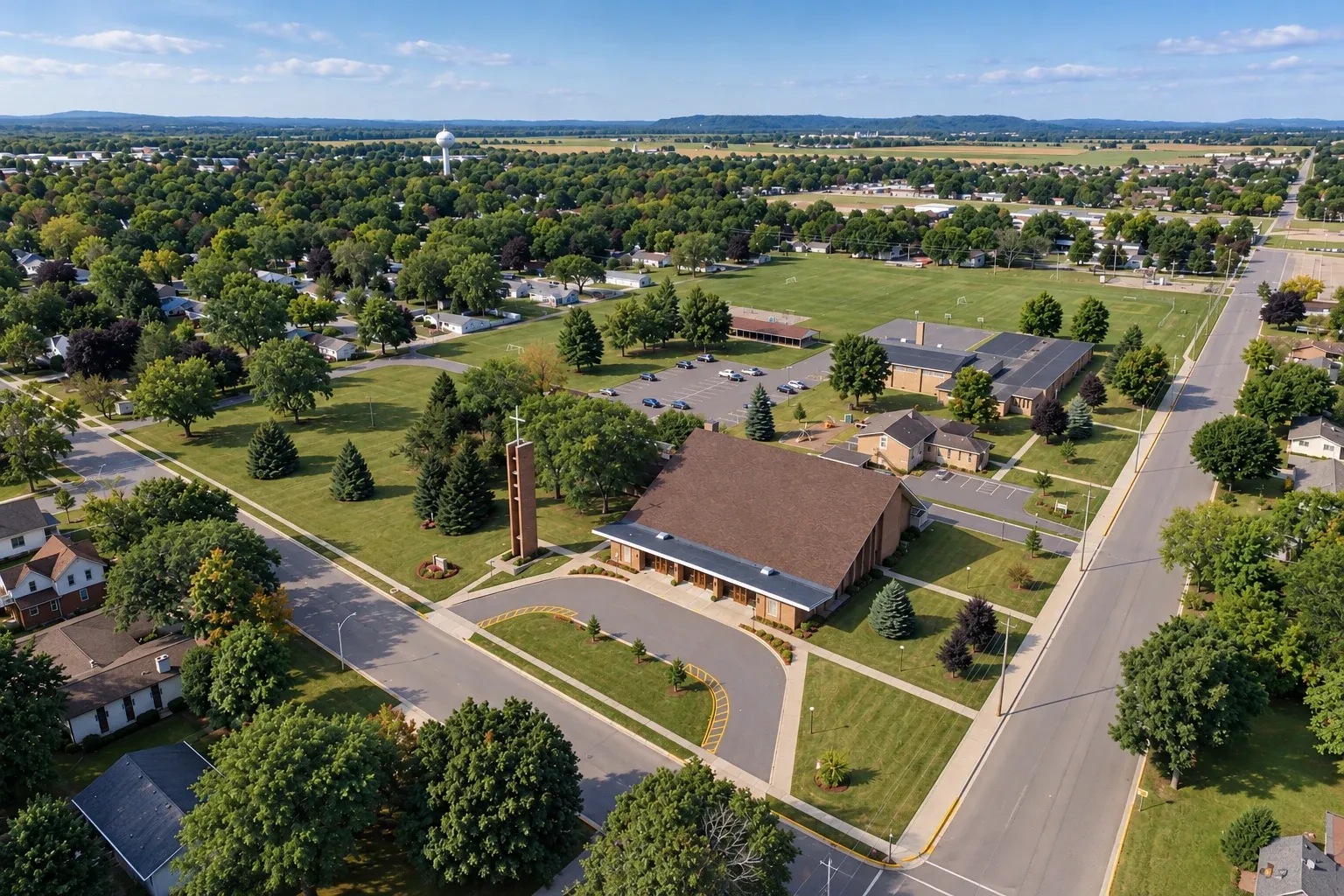
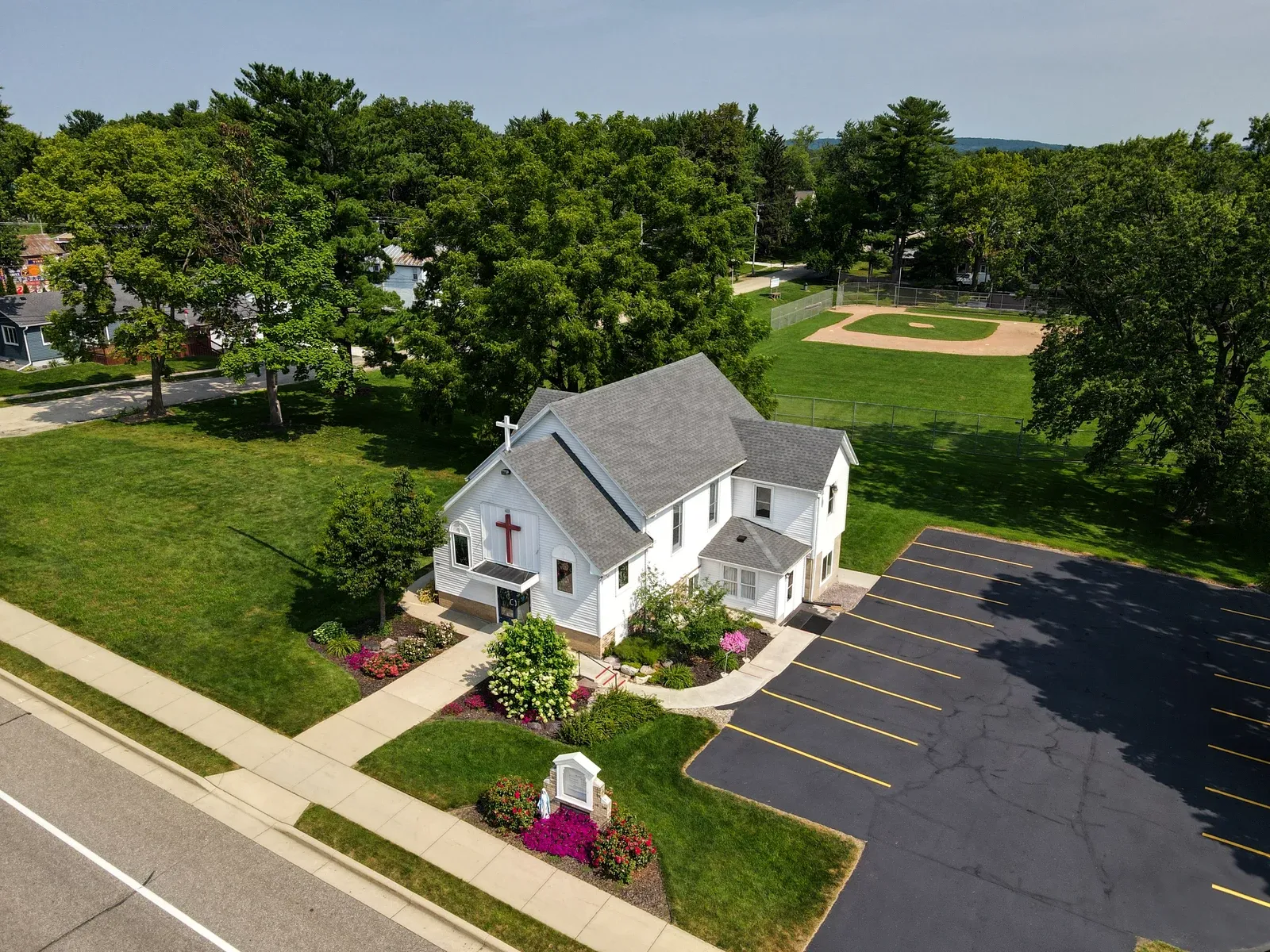
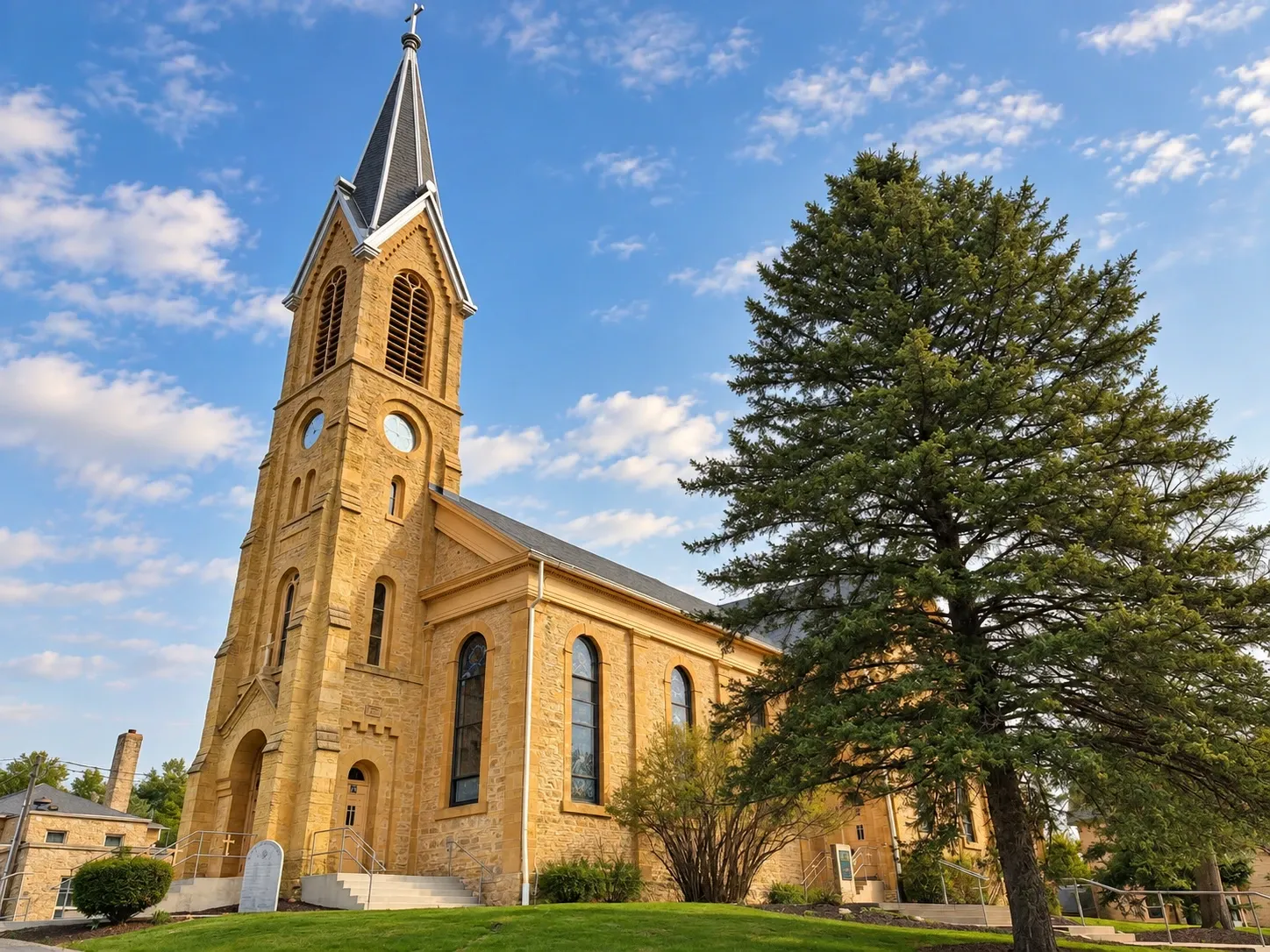
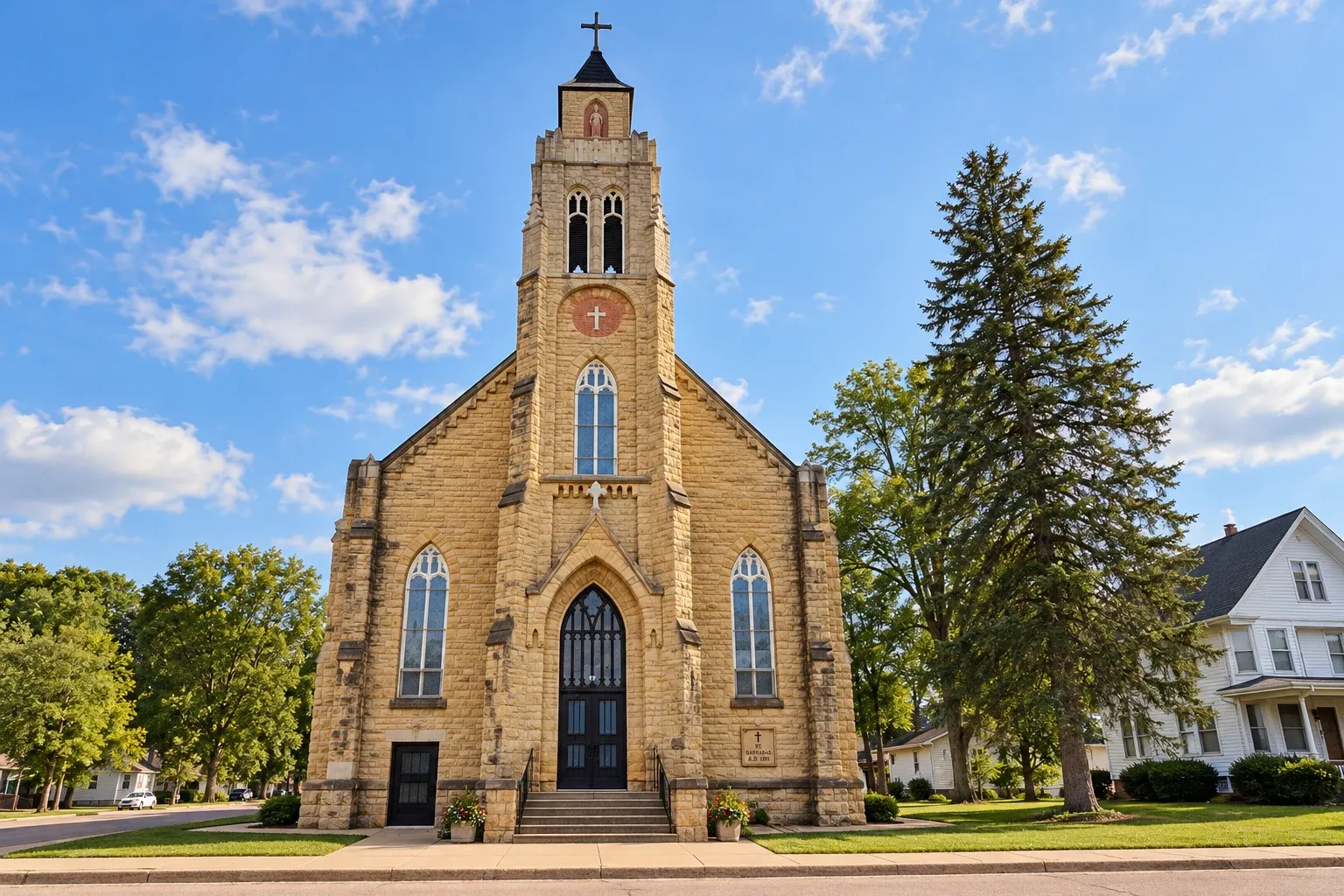
The merger itself does not close any church, and Masses and sacraments continue at our churches. St. Aloysius is now the parish church, and St. Mary, St. Norbert, and St. Barnabas keep their baptismal fonts and the Blessed Sacrament. On paper, the former parish corporations will continue to exist for some time, because some of them hold title to property. The merger documents provide that their funds are transferred to the new parish over time.
The sacramental registers of the former parishes are closed and kept at the main parish office. Baptisms, marriages, and other sacraments are now recorded in the new parish’s registers. For a certificate, contact the parish office.
Haven’t we been through a merger before?
Yes, in part. In 2010, during the diocese’s earlier planning effort, Guided by the Spirit, three parishes became Divine Mercy Parish: St. Aloysius (Sauk City), St. Mary (Merrimac), and St. Camillus (Durward’s Glen), whose church had closed in 2006. No new corporation was created then. The existing St. Aloysius corporation was renamed Divine Mercy Congregation and took in St. Mary Parish.
This time is different. A brand-new parish corporation is being created, with its own new tax ID (EIN). That is why the new parish needs newly elected trustees, new bank accounts, and new offertory envelopes.
Why are we merging?
This is part of Into the Deep, the diocese’s plan to help every parish move “from maintenance to mission.” The diocese explains the reasons on its Into the Deep FAQ page.
Churches and Masses
Will any of our churches close, or Masses be canceled?
We have no such plans. We, the priests of the Society of Jesus Christ the Priest, have served at St. Aloysius since 2006, and within a few years also at St. Norbert and St. Barnabas. After nearly twenty years among you, we are committed to this community, and with the support of Bishop Hying, we are not going anywhere.
We are fully committed to keeping all four of our churches open and thriving: St. Aloysius; St. Mary, Health of the Sick; St. Norbert; and St. Barnabas. We do not intend to close any church, or to cancel Masses as long as people continue to attend them. You can be at peace knowing that we will continue to maintain and care for all of our churches and cemeteries.
Will Mass times change?
We intend to keep celebrating Mass at all four churches, as long as people continue to attend. If a Mass time ever needs to change, we will announce it well ahead of time.
Who will look after each church?
St. Norbert, St. Barnabas, and St. Mary will each have a committee of parishioners devoted to that church. Each committee oversees its church’s day-to-day maintenance and practical tasks, identifies its immediate needs, and decides what needs to be done. The committees work under the Finance Council and report to it. This way, every church has people who know it well and are committed to its care.
Parish trustees
What is a parish trustee?
Under Wisconsin law, every parish is a corporation run by a board of five: Bishop Hying (President), the Vicar General, the pastor (Vice President), and two lay trustees chosen from the parish. One lay trustee serves as Treasurer and the other as Secretary. The role is a real responsibility, not an honorary title.
Why do we need new trustees?
The new parish will be a new corporation, so it needs its own board. The trustees of the former parish corporations continue to serve until the new trustees are in place, and they sign two documents to complete the merger.
What do trustees do?
- The Treasurer attends every Finance Council meeting, reviews the annual budget, and helps keep accurate financial records.
- The Secretary attends every Pastoral Council meeting, keeps the minutes and corporate records, and helps prepare annual reports.
- Both review the annual budget, sign the annual financial report and corporate documents, and attend the board’s annual meeting.
The Treasurer and the Secretary are the two trustees, not separate positions.
Do the trustees control the parish’s money?
Not on their own. The pastor normally manages day-to-day finances, with the advice of the Finance Council. The trustees review the budget and sign corporate documents. Selling or mortgaging parish property, and any major legal matter, requires the consent of all five directors, including the Bishop and the Vicar General.
Are trustees members of the Pastoral and Finance Councils?
Yes. Both trustees are members of both councils because of their office. They take full part in each council’s work and may vote whenever a council takes a vote, though both councils advise the pastor rather than decide. Each has a home council, where they attend every meeting, and joins the other council at least when it takes up the annual budget, the annual financial statements, and the annual report:
- The Treasurer attends every Finance Council meeting, and the Pastoral Council’s meetings on the budget, the financial statements, and the annual report.
- The Secretary attends every Pastoral Council meeting, and the Finance Council’s meetings on the budget, the financial statements, and the annual report.
So both trustees are present whenever either council works on the budget and the annual reports. Neither may serve as a council officer (chair, vice-chair, or council secretary) or chair a committee of either council.
Who can be a trustee?
A trustee must:
- be a fully initiated, practicing Catholic, 21 or older, and registered at one of our parishes
- not be a parish employee
- not be related, up to first cousins, to the other trustee, the priests, parish staff, or members of the Finance Council
- once elected, complete the diocese’s Safe Environment requirements online, which take about an hour and a half: a training module, signing the diocesan policies, and a background and credit check
- attend diocesan trustee training
Trustees also keep confidential matters confidential and disclose any conflict of interest.
Who was elected?
Eric Breunig and Laura Breunig. The election was held at all weekend Masses in our four churches on November 7–8. Parishioners cast 1,119 votes, and the two candidates who received the most were elected: Eric with 476 votes and Laura with 326. Eric will serve as Trustee-Treasurer and Laura as Trustee-Secretary. They share a last name but are not related. Their election is subject to Bishop Hying’s confirmation, and their term runs through June 30, 2028. Meet them on this page.
Can I still nominate someone?
Nominations closed on Sunday, October 25, and the election was held on November 7–8. See who was elected.
How was the slate of candidates chosen?
Each nominee was contacted to confirm their willingness to serve and their eligibility, and the pastor prepared the slate from among them, as the diocesan norms provide. Not every nominee appeared on the ballot. The four candidates and their introductions were published on this page, in the bulletin, and through FlockNote before the election, which was held at all weekend Masses on November 7–8. The two people elected, Eric Breunig and Laura Breunig, now complete the diocese’s Safe Environment requirements, including the background and credit check, and their names are submitted to Bishop Hying for his approval. Nominees did not need a background check before the election.
How long do trustees serve?
The first term runs two years, through June 30, 2028. A trustee may serve up to five terms, or ten years in total. Time spent as a trustee of one of our former parishes does not count toward that limit.
Are trustees paid?
No. Trustees serve as volunteers.
What if a trustee can’t finish the term?
Bishop Hying appoints someone to serve the rest of the term.
Pastoral Council
What does the Pastoral Council do?
It helps the pastor understand the life of the parish and plan for it. It gathers the thoughts of parishioners and advises on worship, faith formation, family life, outreach, and works of mercy. In a newly merged parish, it also helps build unity among our communities. The council is advisory: the pastor makes the final decisions.
Will each church have its own council?
No. The new parish will have one Pastoral Council for all of our communities. Our goal is for every community to be represented on it. Each church will also have its own committee caring for the building and its needs; see Who will look after each church?
Who can serve on the Pastoral Council?
Members must be fully initiated, practicing Catholics, 18 or older, and registered at the parish. They complete Safe Environment training, a background check, and any required training.
How are Pastoral Council members chosen?
At least two-thirds of the members are chosen by parishioners. The pastor may appoint the rest. Parishioners are invited to nominate themselves or others, and nominees share a short biography. Members are then selected by ballot or by a prayerful discernment process. The decree asks for the new councils to be formed as soon as possible, and we will announce the details and dates soon.
How long is a Pastoral Council term?
Three years, beginning July 1. Members may serve two terms in a row. Each year, one-third of the seats are filled, so the council always has experienced members.
How often does the Pastoral Council meet?
At least four times a year; monthly meetings are recommended. Meeting times will be published in the bulletin, and all parishioners are welcome to attend as observers.
Can I help without serving on the council?
Yes. Much of the work happens in committees, staffed mostly by parishioners who are not council members: Worship, Faith Formation and Evangelization, School, Parish Life, Stewardship, Human Concerns, and Vocations.
Finance Council
What does the Finance Council do?
Church law requires every parish to have one. It advises the pastor on the parish’s finances. Each year it helps:
- prepare the budget by June 1, for the year that begins July 1
- prepare the annual financial report to the diocese by August 31
- publish the financial statements for parishioners by September 30
- review the parish’s internal financial controls
- plan for repairs, equipment, and any debt repayment, and keep parish assets safe
Like the Pastoral Council, it is advisory: the pastor makes the final decisions.
Will there be one Finance Council?
Yes. The new parish will have one Finance Council for the whole community, formed as soon as possible, and one budget after the financial merger in 2027.
How are Finance Council members chosen?
The pastor appoints between three and nine members. He looks for parishioners with experience in finance, accounting, investments, insurance, law, fundraising, or building maintenance. The two trustees are also members. We will soon share how to express interest.
Who can serve on the Finance Council?
Members must be fully initiated, practicing Catholics, 18 or older, and registered at the parish. They must:
- complete Safe Environment training and a background and credit check
- attend the diocese’s Finance Council training before taking office
- not be a parish employee
- not be related, up to first cousins, to each other, the priests, parish staff, or the trustees
Members keep matters such as salaries and individual contributions confidential, and disclose any conflict of interest.
How long is a Finance Council term?
Three years, renewable once. Terms are staggered so the council always has experienced members.
How often does the Finance Council meet?
At least four times a year; monthly meetings are recommended. Meetings are announced in the bulletin and open to parishioners as observers, except for confidential matters.
Can I see the parish finances?
Yes. The annual financial statements are published for all parishioners each fall. The Finance Council chair is listed in the bulletin and is available for questions about parish finances.
Money and giving
What happens to the money our parish has saved?
With the merger, the assets of our former parishes belong to the new parish, as Church law and the decree direct. Gifts that donors restricted to a specific purpose stay restricted to that purpose. Church law does not allow the diocese, or anyone else, to take these funds. They stay here, for the good of our parish.
I’ve heard our money is now going to the diocese. Is that true?
No. Our money is not going to the diocese. Our parish keeps full control of its bank accounts and investment accounts.
The diocese’s Parish Financial Services office will only do bookkeeping, limited to payroll and paying bills. Bills still come to our main parish office, and the pastor approves every bill before it is paid. The diocese does not decide what we spend our money on, where we keep it, or how we invest it. As has always been the case, major transactions such as selling property still need the Bishop’s consent.
Should I change how I give because of the merger?
No. Until the financial merger in 2027, please keep giving as you do now: your gifts still go to Divine Mercy, St. Norbert, or Holy Cross, and checks are made out to the same parish as before. Before then, you will receive clear instructions about new envelopes and online giving, including recurring gifts.
After the financial merger, can I still give to my own church?
Yes, and your church will need your gift as much as it ever has. But the way it works will be different, so let us explain, taking St. Norbert’s as the example.
With the canonical merger on October 24, Divine Mercy, St. Norbert, and Holy Cross stopped being three separate parishes and became one parish, Mary, Mother of Mercy, with four churches: St. Aloysius, St. Norbert, St. Barnabas, and St. Mary. St. Norbert’s is not closing. It remains your church, with your community and your 8 p.m. Mass. What changes is who pays the bills.
Until the financial merger, St. Norbert’s accounts pay for the lights, the furnace, the insurance, the snowplowing, the repairs, and the people who serve there. After the financial merger, there is no longer a “St. Norbert’s Parish” that can receive a check and pay a bill. Every one of those expenses becomes an expense of Mary, Mother of Mercy. The electric bill for St. Norbert’s church will be paid by Mary, Mother of Mercy. The priest who drives to St. Norbert’s for the 8 p.m. Mass is supported by Mary, Mother of Mercy. So your Sunday offering goes to Mary, Mother of Mercy for one simple reason: that is the parish that keeps St. Norbert’s open.
This is why there will be one set of envelopes. You can keep placing yours in the basket at St. Norbert’s every week, exactly as you always have. Your gift is not leaving St. Norbert’s. Your gift is what keeps St. Norbert’s running.
Think of a family with four children. Imagine trying to run four separate household budgets, one per child: Anna’s account pays only for Anna’s room and Anna’s shoes, Peter’s only for Peter’s. You could do it, but every parent knows it would be a mess, and the first time one child needed something big, the whole arrangement would fall apart. So families don’t do that. There is one household budget, and every child is fed, clothed, and cared for. Our four churches are now one household. St. Aloysius and St. Mary have been one parish for years, and neither has been neglected because of it. Some years St. Norbert’s will need a new roof; some years St. Mary’s will. Being one parish means no church is ever left to fend for itself, and that is good news for every one of them.
Can I still give toward something specific at my church?
Yes. If you want to support a particular project at your church, such as new carpet, a repair to the steeple, or a memorial, you can make a restricted gift, and the parish is bound by both Church law and civil law to use it only for that purpose. Talk to the parish office and we will record it properly. Ordinary Sunday giving, however, pays the ordinary bills, and those bills now belong to the whole parish.
How will I know the money is being used fairly?
Two ways. First, each church will have its own committee of parishioners looking after its day-to-day needs and maintenance, working under the parish Finance Council, so St. Norbert’s people will be the ones watching over St. Norbert’s, and the same for every church. Second, every year the parish will publish a full financial report to all parishioners, as the Diocese requires, so you can see for yourself where every dollar went.
Will my Sunday offering help support St. Aloysius School?
After the financial merger, yes. St. Aloysius School is a ministry of our parish, as Mass at each of our four churches is, and the whole parish will support it. Until the financial merger, Divine Mercy’s accounts support it. Last year the school cost about $800,000 to run. Tuition and tuition assistance covered about 40 percent; endowment income, the lunch program, Home & School, and fees covered about 25 percent; and the parish covered the remaining 35 percent, about $280,000. Divine Mercy carried that cost from its own income and still ended the year with its finances in balance, without touching its savings. St. Norbert’s offertory, meanwhile, goes mostly to St. Norbert’s own needs: heat, lights, insurance, and upkeep.
After the financial merger, the parish’s support for the school will be part of the yearly parish budget, reviewed by the Finance Council and reported in the annual financial report. Being one parish means that none of our churches, and none of our ministries, has to carry its costs alone.
What is the Offertory Commitment Weekend?
It is not part of the merger, but it comes at the right time. We have not held an offertory program in years, and the cost of running our parishes has gone up. Renewing our commitment now strengthens our finances as we grow together as one parish.
On the weekend of November 21–22, the Solemnity of Christ the King, you will be invited at every weekend Mass to fill out a commitment card in the pew. No money is collected that weekend: it is a commitment, not a collection. You can choose a new giving level, which begins January 1, 2027, and set up recurring online giving through PushPay. Divine Mercy, St. Norbert, and Holy Cross each have their own card, because their finances stay separate until the financial merger.
Other questions
What else will change?
Our new website, the one you are reading now, is already live. It is still a work in progress, and it is where we now post the latest news for our new parish. Over the coming months you will also see new offertory envelopes and a single central parish office. We will let you know about each change before it happens.
Where can I find more answers?
The diocese answers more questions on its Into the Deep FAQ page, also available in Spanish. If your question isn’t answered here, please contact Fr. Miguel or the parish office at 608-643-2449 or [email protected]. We will add common questions to this page.