Our history
How the Catholic faith took root on both banks of the Wisconsin River, and how four churches came to be one parish.
Our four churches were built by people who wanted the Mass close to home: German farmers on both banks of the Wisconsin River, Irish families in Mazomanie, and the Catholics of Merrimac and Durward’s Glen. Over more than a century they raised these churches, rebuilt them after fire, and handed them on to us. This is their story, from the first missionary in 1845 to the one parish we are becoming.
Where the old sources disagree about a date, this page gives only what they agree on. The sources are listed at the end.
Timeline
The missionary years1845–1867
- 1845
Fr. Adalbert Inama, a Norbertine priest from the Tyrol, settles at Sauk Prairie at the invitation of Bishop Henni of Milwaukee.
- 1846St. Norbert, Roxbury
He builds St. Norbert House, a log home and chapel, the first Catholic church in Dane County.
- 1846St. Aloysius, Sauk City
Sauk City’s first church is finished in the summer and burns in October.
- 1851St. Aloysius, Sauk City
The cornerstone of a brick church is laid, with gifts from Catholics and their non-Catholic neighbors.
- 1856St. Barnabas, Mazomanie
Mazomanie’s Catholics organize, at first visited monthly by a priest from Sauk City.
- 1860St. Norbert, Roxbury
The stone church that still stands is in use; a stone school follows in 1864.
The river as a border1868–1945
- 1868
The new Diocese of La Crosse takes the land north and west of the Wisconsin River, Sauk City with it. Roxbury and Mazomanie stay with Milwaukee.
- 1879St. Norbert, Roxbury
Fr. Inama dies at St. Norbert House and is buried in the parish cemetery.
- 1889–1892St. Barnabas, Mazomanie
The sandstone church is built.
- 1929St. Barnabas, Mazomanie
Fire guts the church in November. By the end of 1930 it is rebuilt within its stone walls.
- 1932Durward’s Glen
Mary Thecla Durward gives the Glen to the Camillian Fathers.
One diocese1946–2005
- 1946
The Diocese of Madison is established, bringing both banks of the river together.
- c. 1949St. Mary, Merrimac
The Camillians open St. Mary, Health of the Sick, in a schoolhouse moved into Merrimac.
- 1968St. Aloysius, Sauk City
The present church is built, and the old church comes down.
Becoming one2006–2026
- 2006
Priests of the Society of Jesus Christ the Priest come to St. Aloysius and St. Mary. St. Camillus Parish at the Glen closes.
- 2010
St. Aloysius, St. Mary, and St. Camillus become Divine Mercy Parish.
- 2011St. Barnabas, Mazomanie
St. Barnabas and St. John the Baptist, Mill Creek, become Holy Cross Parish.
- 2021St. Norbert, Roxbury
The parish keeps its 175th anniversary with Bishop Hying.
- 2023
Divine Mercy, St. Norbert, and Holy Cross become one pastorate.
- 2024
Bishop Hying names it Mary, Mother of Mercy.
- 2026
The three parishes are becoming one: Mary, Mother of Mercy Parish.
A mission on both banks
In the autumn of 1844, Fr. Adalbert Inama, a canon of the Norbertine abbey of Wilten near Innsbruck, in the Tyrol, visited Sauk Prairie as the guest of Agoston Haraszthy, the Hungarian who had laid out the village that became Sauk City. Bishop John Martin Henni of Milwaukee invited Fr. Inama to stay, and late in 1845 he settled here. Haraszthy gave lots for a church on the west bank of the river and a hundred acres on the east bank for Fr. Inama’s order.
Fr. Inama hoped to found a house of his order: a priory that would farm its own land, train missionaries, and serve the German settlers of the West. Fr. Maximilian Gaertner and several lay brothers came from Wilten in 1846, and two novices were received in 1852. The community never took root. Help from Europe was scarce and the missions were far apart, and in 1858 Wilten called Fr. Gaertner home. Historians still differ about which reason weighed most.
From his log house in Roxbury, Fr. Inama served Catholics as far away as Madison and Columbus. In 1847 he wrote that he had named his mission for St. Norbert, the founder of his order, and that the settlers on the Roxbury side came mostly from Bavaria, those on the Sauk side mostly from the Rhineland. He retired in the early 1870s, died at his log house in October 1879, and is buried in the St. Norbert cemetery.
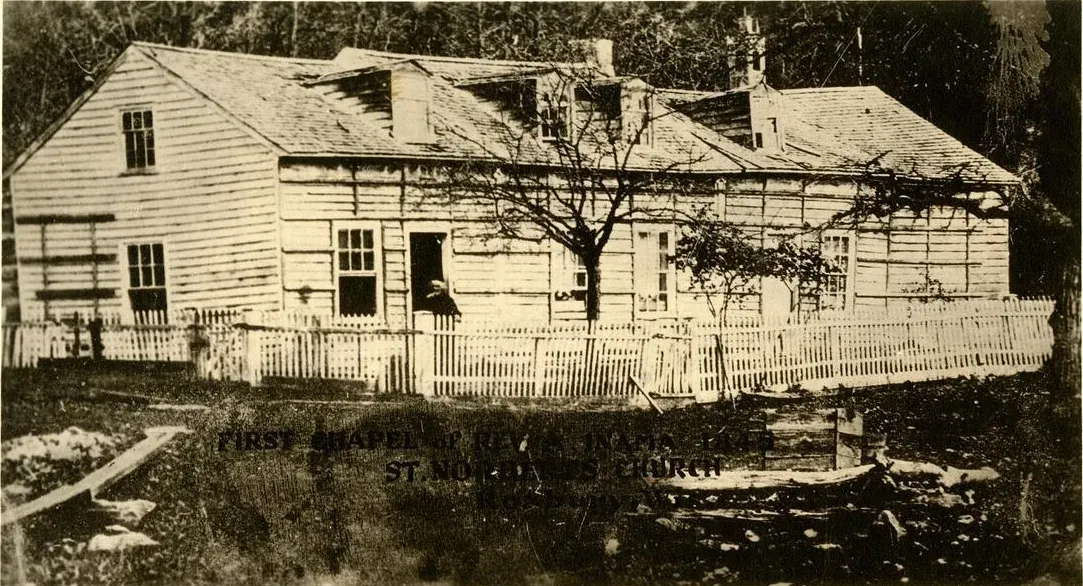
St. Norbert, Roxbury
St. Norbert’s counts its life as a parish from 1846, when Fr. Inama built St. Norbert House, a log home and chapel on Madison Creek. It was the first Catholic church in Dane County. In 1850 he gave three acres about a mile to the east for a church and a school, and a small brick church was finished there in 1853.
The parish soon outgrew it. Work on the present stone church began in the late 1850s; the church was in use by 1860, and its interior was finished in 1866. In the late 1870s it was enlarged into the shape of a cross, and around 1893 it gained its tower, three bells, and a pipe organ. Above the altar hangs a painting of the Virgin and Child with saints, sent from Bavaria and, by long tradition, a gift of King Ludwig I.
A stone school opened beside the church in 1864, taught by the Dominican Sisters of Racine. Fr. Inama paid for most of it, and near the end of his life he gave the sisters land for a convent.
The parish kept its golden jubilee in 1896 and its 150th anniversary in 1996. In 2020 it restored the church’s roof, spire, and stonework. On June 6, 2021, the feast of St. Norbert, Bishop Donald Hying celebrated the parish’s 175th anniversary, and in 2022 the stained-glass windows were restored.
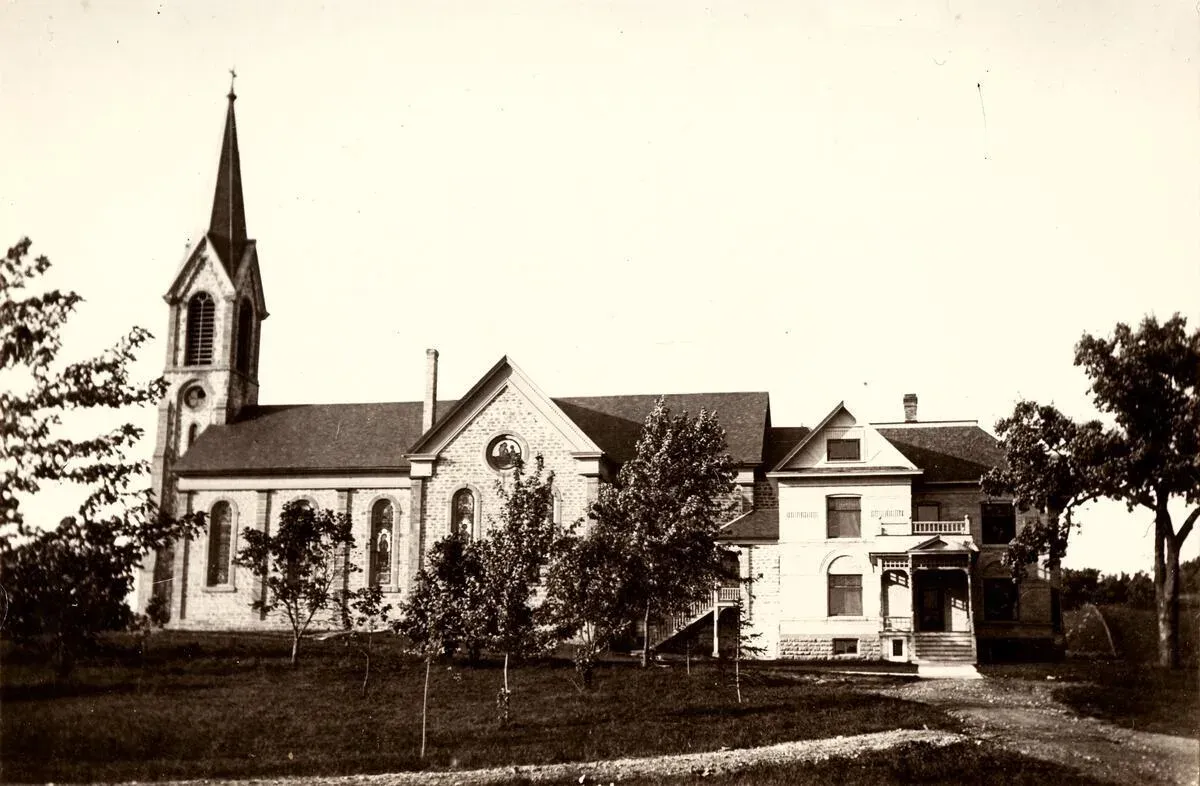
St. Aloysius, Sauk City
When Fr. Inama arrived, Sauk City’s Catholics were a handful of German families. The parish counts its years from 1845, and its register records a baptism as early as October 1844. In January 1846 the families pledged to build a small frame church on lots Haraszthy had given; until then, Fr. Inama said Mass in the village schoolroom, which they shared with Protestants. The church was finished that summer, and in September Bishop Henni celebrated its first Mass and confirmed. In October it burned, and for several years Mass returned to the schoolhouse. Fr. Gaertner served the town until he was recalled to Wilten in 1858.
In 1851 the cornerstone of a brick church was laid. Sauk City was known for its freethinkers, and non-Catholic neighbors gave alongside Catholics to build it. The church grew in stages through the 1850s and 1860s into a building 103 feet long, which served the parish until 1968, when the present church was built and the old one taken down. Some of its statues and relics are kept today at Our Lady of Loretto in Honey Creek, a stone church built in 1880 as a mission of St. Aloysius and now listed on the National Register of Historic Places.
St. Aloysius School dates its beginning to 1858. In the 1890s two Dominican sisters taught its eighty pupils, and in 1958 the school moved into its present building. On January 1, 2015, Bishop Robert Morlino dedicated the Mary, Mother of God Adoration Chapel in the former sisters’ convent between the church and the school.
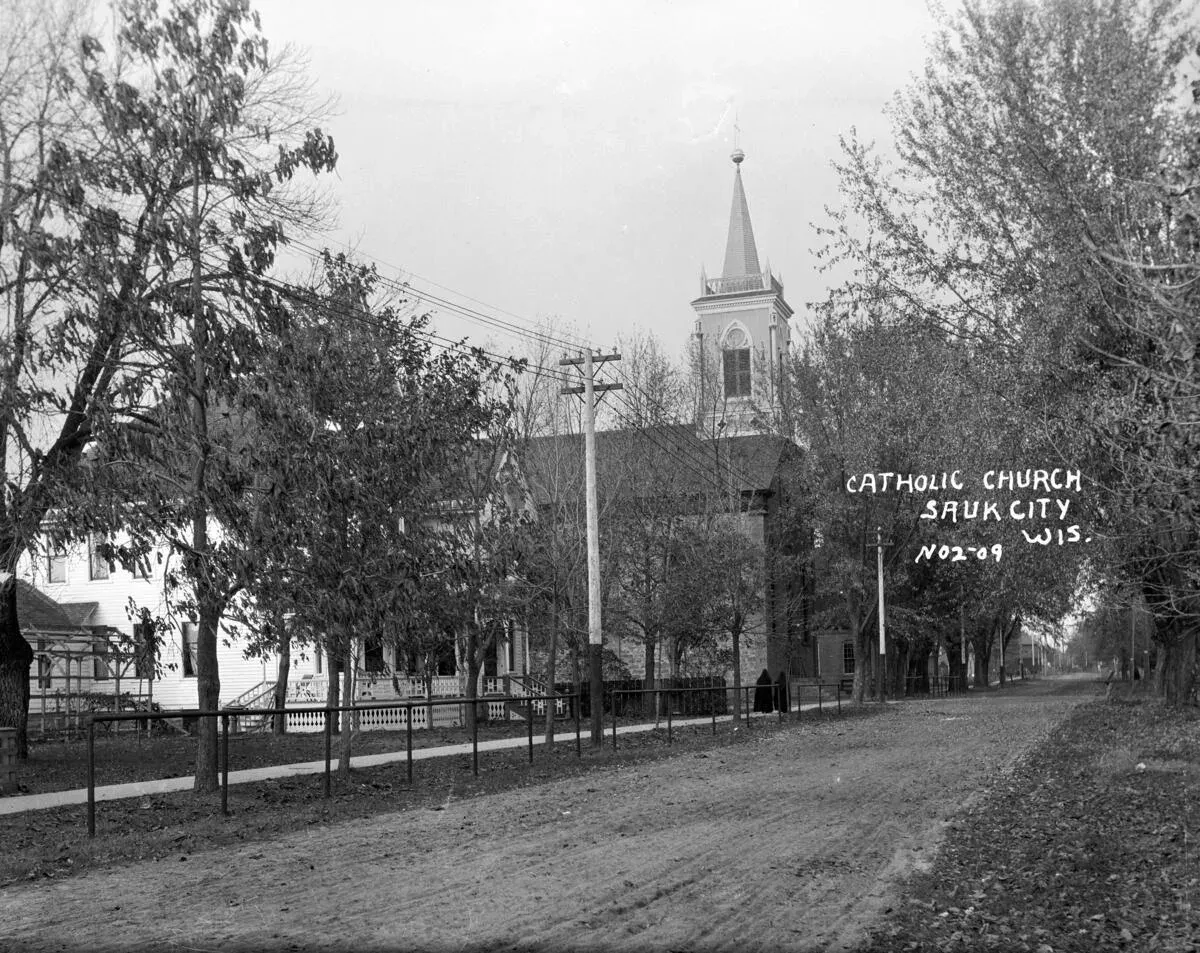
St. Barnabas, Mazomanie
Mazomanie began in 1843 as a settlement of English emigrants, and the railroad reached it in 1856. That year its Catholics, many of them Irish families, organized, and for three years a priest came from Sauk City once a month to say Mass. A small frame church was built about 1856 and a larger one in the 1860s, and from about 1860 the congregation had a priest of its own.
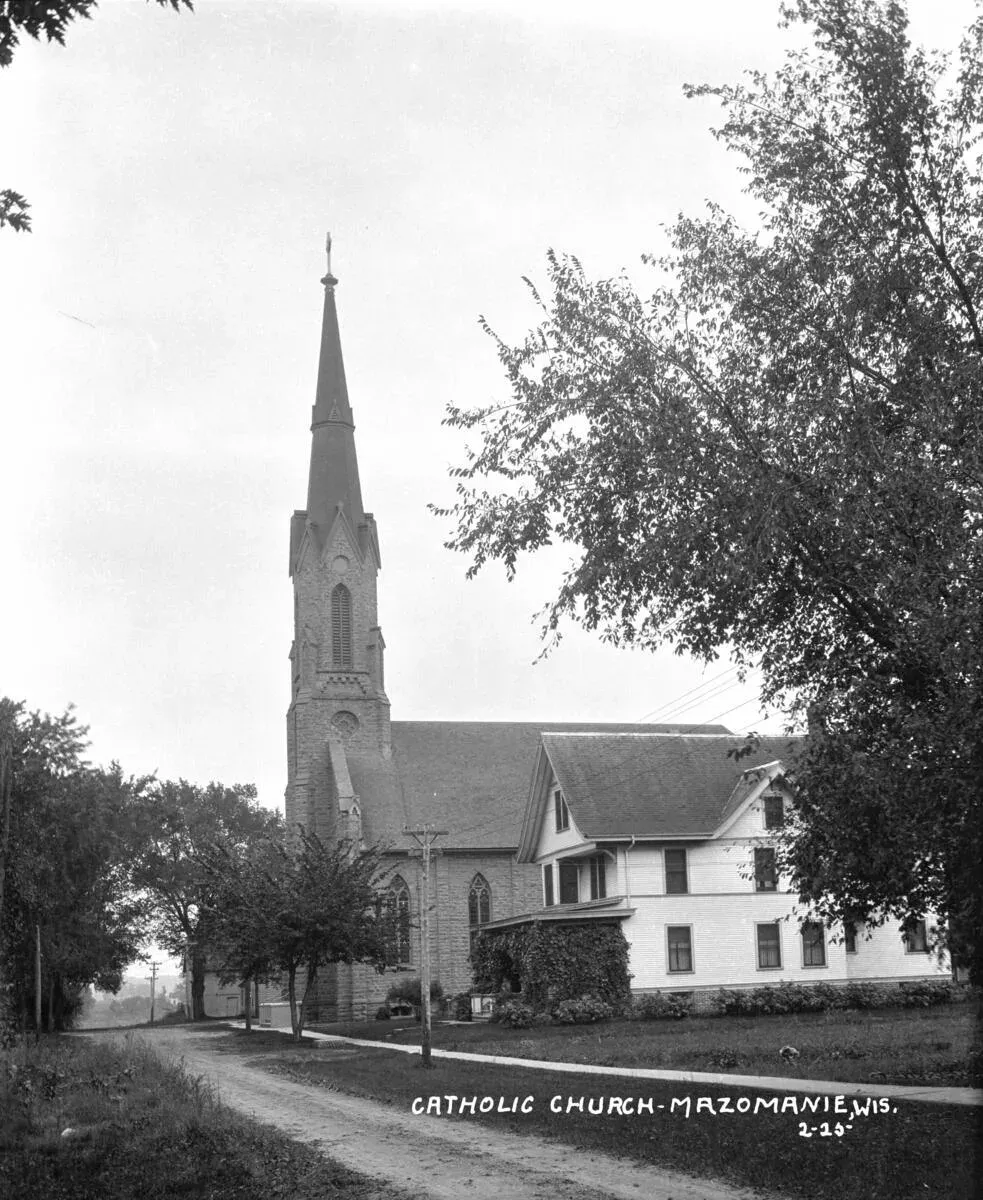
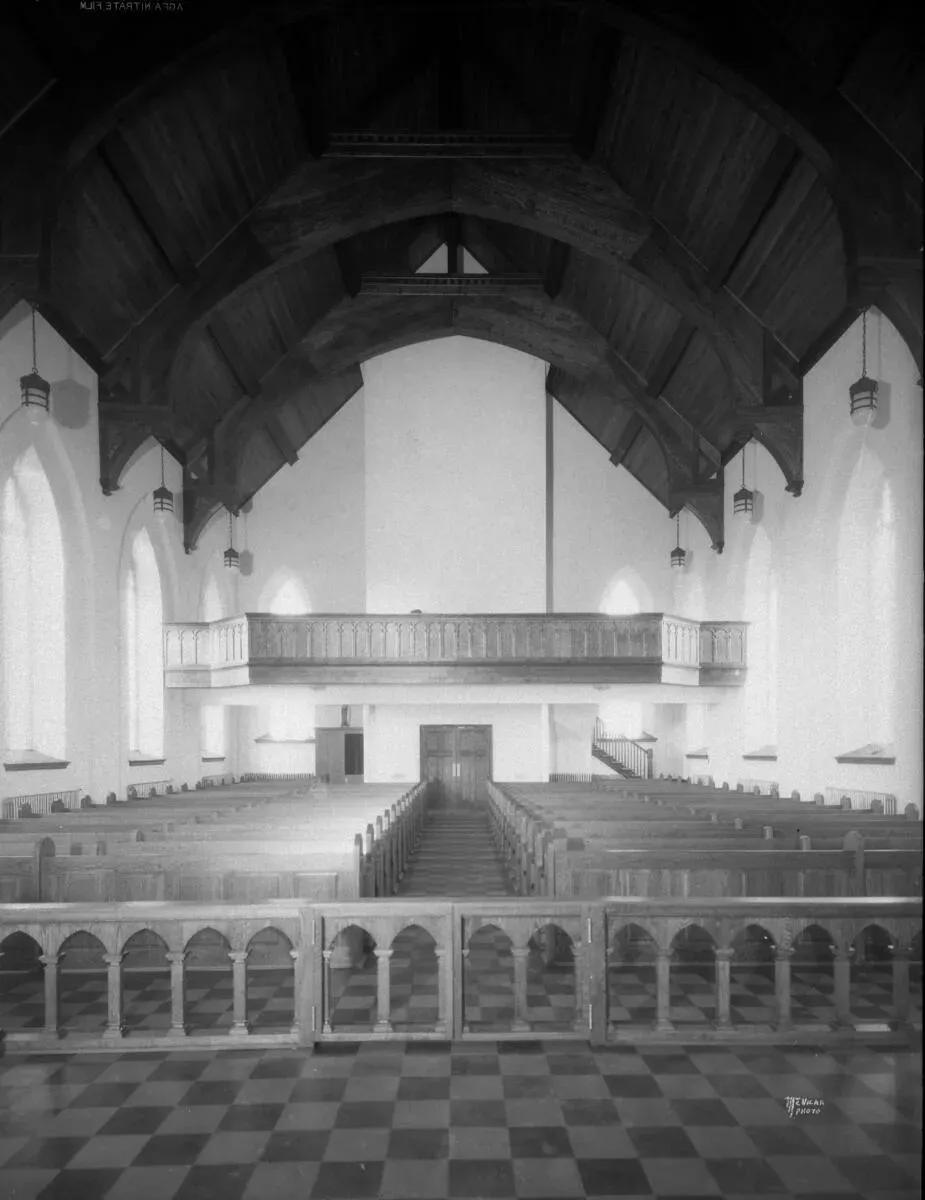
The present church, of sandstone in the Gothic style with a square tower, went up between 1889 and 1892. On November 23, 1929, fire destroyed its roof, steeple, and interior, but the stone walls held. The parish rebuilt inside them, and by the end of 1930 the church stood again, with a new spire and a hammerbeam roof.
The parish kept its 150th anniversary in 2006. In 2011, St. Barnabas and St. John the Baptist in Mill Creek, long served by the same priests, became one parish, Holy Cross. Since 2023 the Mill Creek church has been cared for by the neighboring Saints Joachim and Anne Pastorate, while St. Barnabas belongs to ours.
St. Mary, Health of the Sick, Merrimac
Merrimac’s Catholic church is the youngest of our four. The county histories of 1880 and 1918 list no Catholic congregation in the village. Catholics nearby worshiped at Durward’s Glen, where the painter Bernard Durward, his family, and their neighbors built the stone chapel of St. Mary of the Pines in 1866. In 1932 his daughter, Mary Thecla Durward, gave the Glen to the Camillian Fathers, an order founded to care for the sick, and they opened a novitiate there.
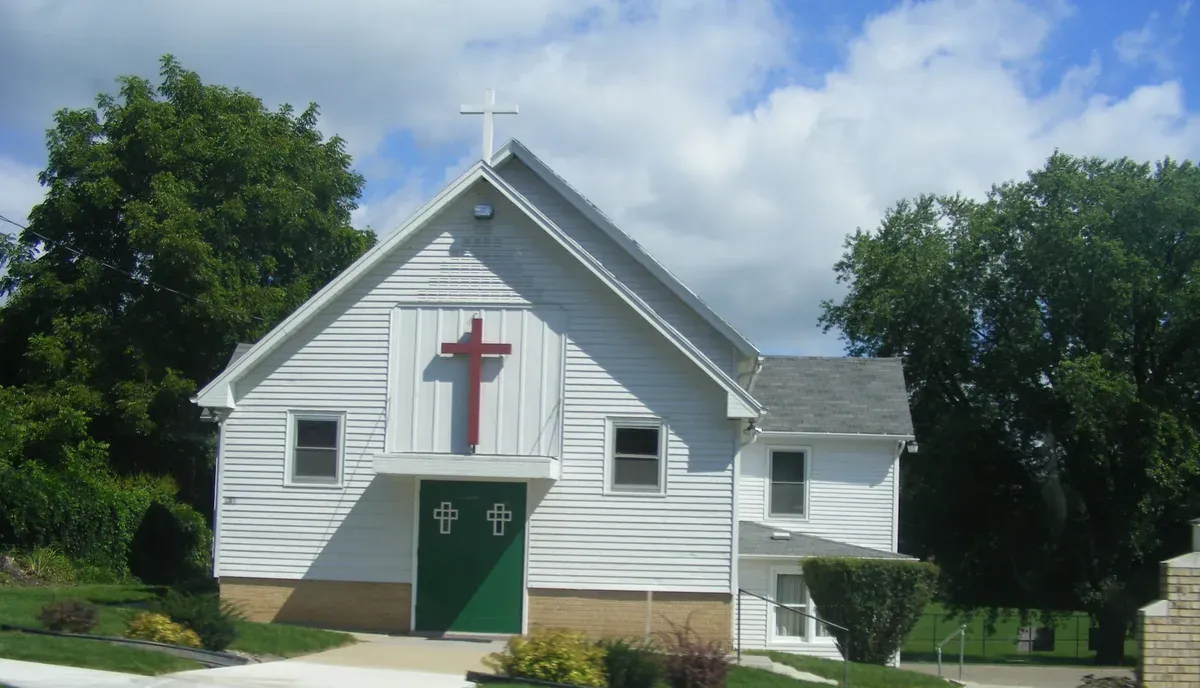
About 1949 the Camillians opened a mission church in Merrimac and named it for Our Lady under her title Health of the Sick, a fitting name for an order devoted to the sick. They bought a country schoolhouse, moved it into the village, and set it on a new basement, and Mass was said at an old altar brought from All Saints Church in Dellona. A small parish of St. Camillus grew up at the Glen itself, and for some fifty years Camillian priests from the Glen served both.
By 2006 the pastor of St. Aloysius was also caring for St. Mary’s. That year the Camillians withdrew from the Glen and closed St. Camillus Parish, and its families joined St. Mary’s and other nearby parishes. Durward’s Glen, with its 1866 chapel, has been listed on the National Register of Historic Places since 1978.
Becoming one parish
For most of their history our churches did not even share a diocese. When the Diocese of La Crosse was created in 1868, the Wisconsin River became a diocesan border: Sauk City, on the west bank, went to La Crosse, while Roxbury and Mazomanie stayed with Milwaukee. The Diocese of Madison, established in 1946, brought both banks together.
In November 2006, two priests of the Society of Jesus Christ the Priest, Fr. Miguel Galvez and Fr. Faustino Ruiz, came to St. Aloysius and St. Mary at the welcome of Bishop Robert Morlino. The Society, an association of priests and lay faithful, was founded in Spain and approved by the Diocese of Cartagena in 1980. Within two years its priests were serving St. Norbert and St. Barnabas as well, and the diocese’s 2007 plan, Guided by the Spirit, grouped our four churches together.
In 2010, St. Aloysius, St. Mary, and St. Camillus became Divine Mercy Parish. Bishop Morlino celebrated the merger on Divine Mercy Sunday, April 11, and his decree took effect on August 1. Each church kept its own name and patron. In 2011 St. Barnabas joined St. John the Baptist in Mill Creek as Holy Cross Parish, and St. Norbert remained a parish of its own, served by the same priests.
In July 2023, under the diocese’s plan Into the Deep, Divine Mercy, St. Norbert, and Holy Cross became one pastorate with one team of priests. Its transition team received more than thirty suggested names and narrowed them to seven; parishioners ranked those, and the three favorites went to Bishop Donald Hying, who chose Mary, Mother of Mercy in March 2024. The name honors the Mother of Christ, whom the Church greets in the Salve Regina as Mother of mercy, and it carries forward the devotion that gave Divine Mercy Parish its name.
Now the three parishes are becoming one: Mary, Mother of Mercy Parish, with four churches, each keeping its own name, patron, and history. Read how the merger works.
Help us tell the story
Much of this history has never been published. We know little about the founding of St. Mary’s in Merrimac, the twentieth century at St. Norbert and St. Barnabas, or the sisters who taught at St. Aloysius School. If you have an anniversary book, a dedication program, old photographs, or memories of our churches, please contact the parish office. We would be glad to copy what you have, return the originals, and add what they tell us here.
Sources
- Fr. Adalbert Inama’s letters, translated in the Wisconsin Magazine of History, volumes 11 and 12 (1927–1928)
- Harry H. Heming, The Catholic Church in Wisconsin (1895–1898)
- Madison, Dane County and Surrounding Towns (1877) and History of Dane County (1880)
- The History of Sauk County, Wisconsin (1880)
- William Kittle, History of the Township and Village of Mazomanie (1900)
- Mary Grace Terry, The Story of Durward’s Glen (1958)
- Wisconsin Historical Society records for St. Norbert, St. Barnabas, and Durward’s Glen, and the National Register nomination for Our Lady of Loretto
- The Diocese of Madison’s newspaper, the Catholic Herald, 2006–2024, including the 2010 decree of merger
- The Mazomanie Historical Society and the Sauk Prairie Area Historical Society
- Our pastorate’s bulletins of January to March 2024, on the choice of our name